Found Hope for a healthier hairline
Hair loss can happen gradually and affect more than just appearance. By taking part, you could help researchers better understand hair loss. We are running the trial in Brisbane and Melbourne.


Hair loss can happen gradually and affect more than just appearance. By taking part, you could help researchers better understand hair loss. We are running the trial in Brisbane and Melbourne.
Hair loss can develop gradually and appear in different ways – from thinning at the crown, to changes along the hairline or increased scalp visibility. These changes are common and often linked to androgenic alopecia, the most common form of hair loss.
Clinical researchers are studying hair loss to better understand the condition and are seeking people with lived experience to take part in research studies.
What’s this study about?
We’re evaluating an investigational treatment that doctors and researchers are studying to see whether it may help with hair loss and support hair regrowth.
This means you could be among the first to try a new approach that isn’t available to the public yet while contributing valuable data that could help millions dealing with the same thing you are.
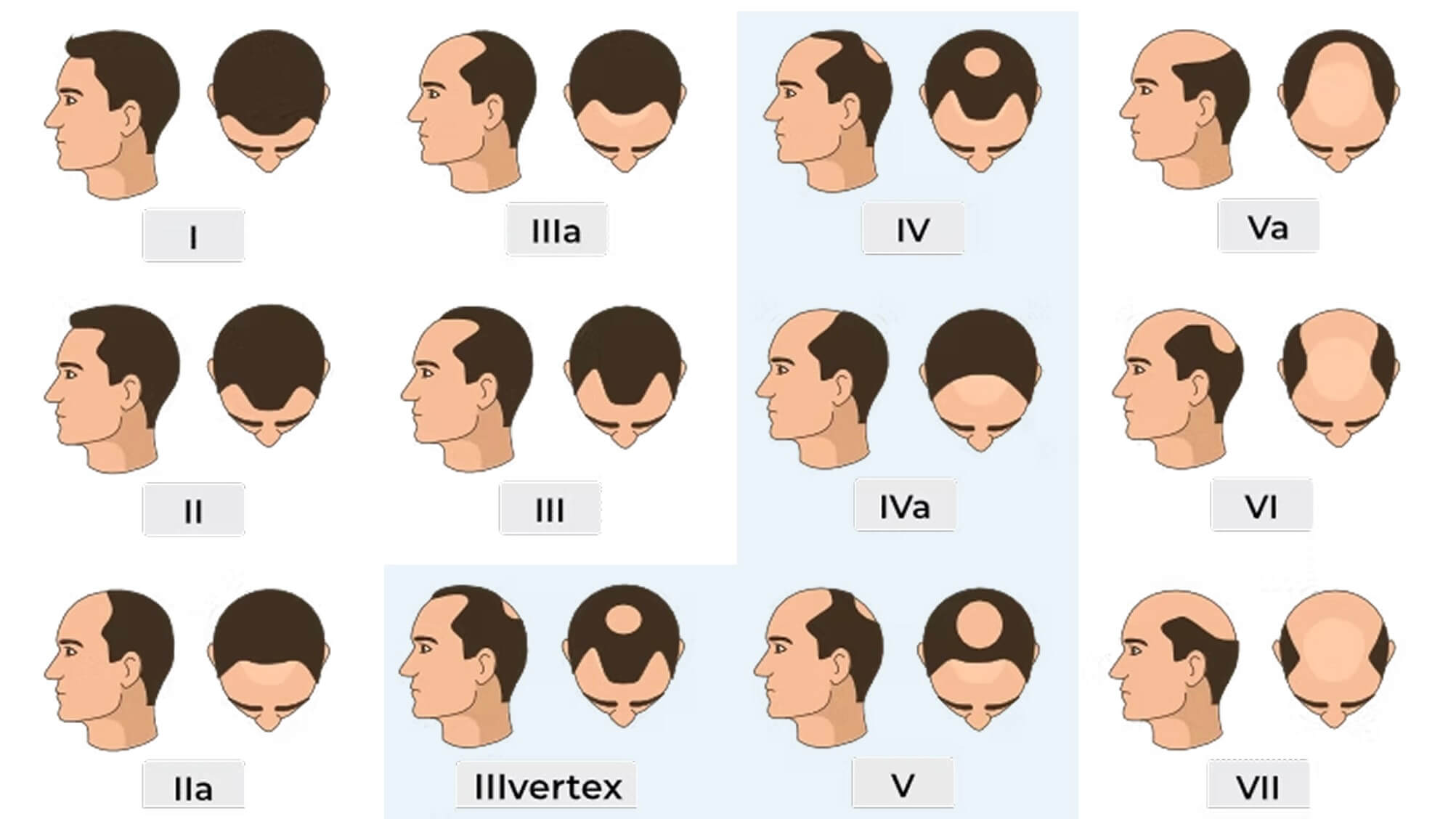
Use the guide below to see if your hair loss matches what researchers need for this study.
We’re specifically looking for these patterns:
Stage III Vertex
When you look down at the top of your head, you can clearly see your scalp at the crown. Your hairline has receded at the temples. There’s visible thinning where there used to be coverage.
Stage IV
Your hairline has receded significantly. The hair on your crown is sparse or minimal. There’s still a band of hair connecting the sides, but both the front and top show clear scalp visibility.
Stage IVa
Similar to Stage IV but with more pronounced frontal hair loss. The receding has progressed further at the front, while the crown shows noticeable thinning. The separating band of hair is still present but less dense.
Stage V
The hair loss has progressed—larger areas of visible scalp, the band of hair between front and back is getting narrower and less dense, and the thinning has become more pronounced overall. The areas of hair loss at the front and crown are larger and closer to connecting.
Call to speak with a recruitment officer who can discuss it further with you. If you’re seeing noticeable hair loss and scalp visibility from androgenic alopecia, you’re likely in the range researchers are looking for.
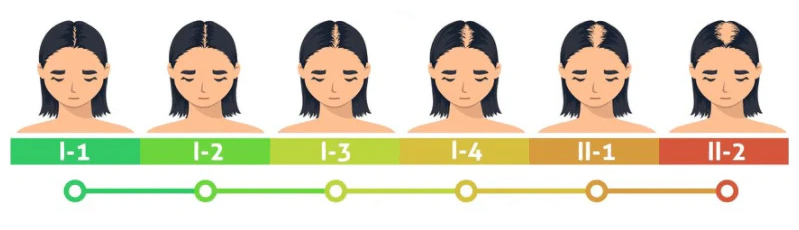
Women’s hair loss from androgenic alopecia typically looks different to men, it’s less about receding hairlines and more about overall thinning across the crown.
We’re looking for Ludwig stages I-2, I-3, I-4, II-1, or II-2:
I-2 to I-4
You’ve noticed your part line widening. When you look at the top of your head, there’s visible thinning through the centre with noticeable scalp showing. The density has decreased, but you still have some coverage.
II-1 to II-2
The thinning has become more pronounced. Your part line is significantly wider, with more visible scalp across the crown area. The hair density on top has decreased noticeably compared to the sides, though your frontal hairline remains relatively intact.
(androgenic alopecia)
from stages I to II
Sound like you? You might be eligible for this research study.
Age
We’re looking for males aged 18 – 65 to participate.
Generally healthy, no prescription medications
We need participants who aren’t currently on regular medications, this helps researchers evaluate the treatment without interference from other medications.
Clinic visits
All appointments happen at our Brisbane or Melbourne clinics, with flexible scheduling.
Time commitment
Study duration and visit frequency will be explained during your screening appointment. We schedule around your work, study, or life commitments.
Nucleus Network is the global leader in early phase clinical trials with clinical facilities across Australia, the UK, and the US. Our clinic has been conducting safe, ethical research for years, contributing to the development of medications used worldwide.
What that means for you:
Clinical trials are an essential step in developing new medicines, vaccines, and treatments. They help researchers understand how a therapy works in people, including how much to take, how often, and who it can help.
Before any trial involves participants, the treatment has already been carefully tested in laboratories. Once it reaches a clinical trial, it is reviewed and approved by an independent ethics committee to ensure it meets strict safety and ethical standards.
Volunteers are at the heart of this process. When you take part, you are not just helping researchers, you’re contributing to the health of future patients and families. Every medicine in your pharmacy, from antibiotics to asthma inhalers, exists because people like you chose to get involved.
Participation is always voluntary, and you are supported by qualified medical professionals every step of the way.
No. Some of our studies are designed for people with specific health conditions, while others involve healthy adults. Each trial has its own eligibility criteria, and our team will let you know if you’re suitable for a current or future study.
Yes. Clinical trials are conducted under strict ethical and medical standards to protect participants’ safety. Every study is reviewed and approved by an independent ethics committee and follows a detailed protocol that outlines how the research will be conducted.
Before any clinical trial begins, the treatment or vaccine has already gone through extensive preclinical testing in laboratories. Doses are carefully managed, and your health is closely monitored by experienced medical staff throughout the study. You will also have 24/7 access to clinical care. While all trials carry some level of risk, serious side effects are rare and your wellbeing is our top priority.
Yes. Participants are paid for their time and involvement. The amount depends on the specific study and reflects the commitment required, including clinic visits and follow-ups. All payment terms are explained clearly before you decide to take part.
Each study is different. Some involve just a few short visits, while others may require overnight stays or run across several weeks or months. We will always explain the time commitment clearly so you can decide what works for you.
Yes. Many participants continue working or studying while taking part in a clinical trial. Our clinics offer high speed Wi-Fi and a comfortable environment, so you can use your time productively during your stay. We will let you know in advance what the schedule looks like for your specific study.
Participation is completely voluntary. You can withdraw from a study at any time, for any reason. Our team will support you through the process and explain any important considerations.
Not always. Access to the study medicine after a trial depends on several factors, including regulatory approval and trial outcomes. Our team will explain what to expect during the consent process.
Complete the quick eligibility questionnaire. If you appear to meet the basic criteria, we’ll contact you to discuss the study in detail and answer all your questions.
No obligation, this is just to see if you might be eligible. You’ll have plenty of time to decide if participation is right for you.
We’re here to guide you every step of the way, answer anything you’re unsure about, and show you just how impactful your contribution can be. Ask one of our friendly recruitment team members.